Problem
KEYTRUDA is one of the most widely recognized oncology brands in the world — and one of the most heavily regulated. Social media advertising for a drug of this profile operates under strict FDA promotional guidelines: every frame is reviewed by medical, legal, and regulatory teams before anything goes live. Consistency across formats isn't a preference, it's a compliance requirement. Inconsistent motion behavior or off-brand type treatment can trigger a full restart of the approval cycle.
The ask was a scalable social media animation system for KEYTRUDA's Facebook and Twitter campaigns — one that could support multiple therapeutic indications, adapt to different clinical data sets, and move through regulatory review efficiently.
My Role
I was the lead animator and motion designer on this campaign, and the core of my contribution was architectural: I designed and built the After Effects template system that the entire campaign was derived from.
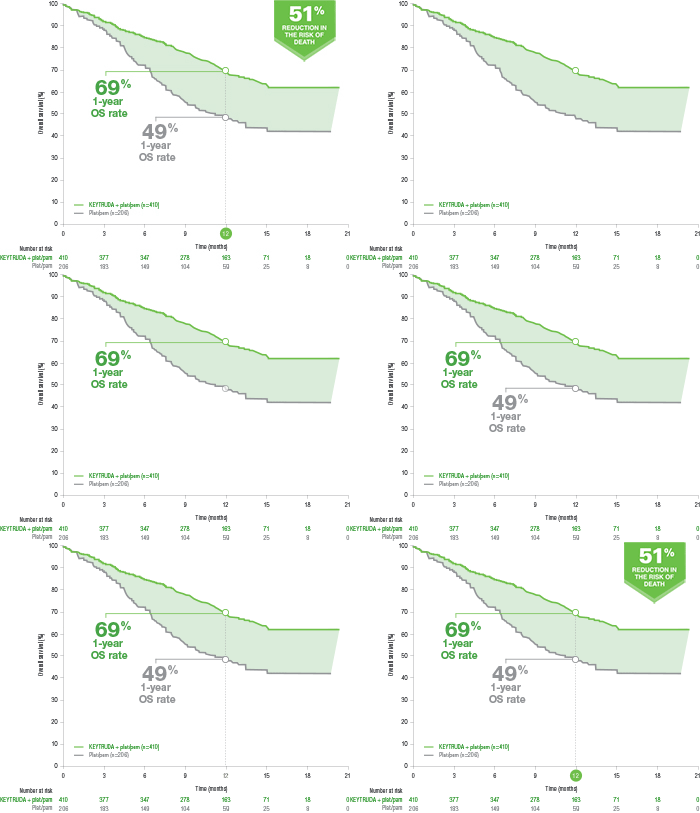
Rather than animating each ad individually from scratch, I established a reusable template structure — defining the motion language, timing standards, type animation behavior, data reveal sequences, and component hierarchy for the Facebook format. The template was built to accommodate variable clinical data (different survival curves, different percentage callouts, different indication copy) without requiring a rebuild each time. Regulatory-ready from the first frame.
That system approach meant faster turnaround on revisions, consistent visual behavior across every execution, and a repeatable process that could scale as the campaign grew across indications.
Below is the primary Facebook template — the foundational execution the system was built around.
My Role
I was the lead animator and motion designer on this campaign, and the core of my contribution was architectural: I designed and built the After Effects template system that the entire campaign was derived from.
Rather than animating each ad individually from scratch, I established a reusable template structure — defining the motion language, timing standards, type animation behavior, data reveal sequences, and component hierarchy for the Facebook format. The template was built to accommodate variable clinical data (different survival curves, different percentage callouts, different indication copy) without requiring a rebuild each time. Regulatory-ready from the first frame.
That system approach meant faster turnaround on revisions, consistent visual behavior across every execution, and a repeatable process that could scale as the campaign grew across indications.
Below is the primary Facebook template — the foundational execution the system was built around.
When the Brief Demands Something Different
Not every execution fits cleanly into a template. The Biomarker Status ad was a case where the content required a different visual approach — the DNA helix as a primary graphic element demanded its own motion logic, its own reveal timing, its own sense of scale. Forcing it into the standard template structure would have produced something technically compliant but creatively flat.
So I adapted. The Biomarker Status piece was built as a standalone execution — drawing on the same motion language and timing sensibility as the template system, but purpose-built for the visual weight of the helix and the conceptual framing of biomarker testing as a "roadmap." Same brand, same regulatory constraints, different creative problem.
This is the kind of judgment call that a template system actually enables — knowing the rules well enough to know when to break them, and having enough command of the motion language to execute confidently outside the prescribed structure. Below is a Banner Ad that follows the template:
The System at Scale
The following executions were produced using the template system I built — demonstrating how the motion language scaled across different therapeutic areas, campaign messages, and clinical data sets. Each required adapting the core template to new indication copy, new efficacy data, and new regulatory requirements, while maintaining visual consistency across placements.
The following executions were produced using the template system I built — demonstrating how the motion language scaled across different therapeutic areas, campaign messages, and clinical data sets. Each required adapting the core template to new indication copy, new efficacy data, and new regulatory requirements, while maintaining visual consistency across placements.